Anti-Clanker Campaigns
Join us in our campaigns against mindless clank create a better future for all, where AI is our servant and not our master
Promoting RESPONSIBLE and SAFE AI
AI Labelling
All AI content should be clearly marked as such, just as there are food labellings.
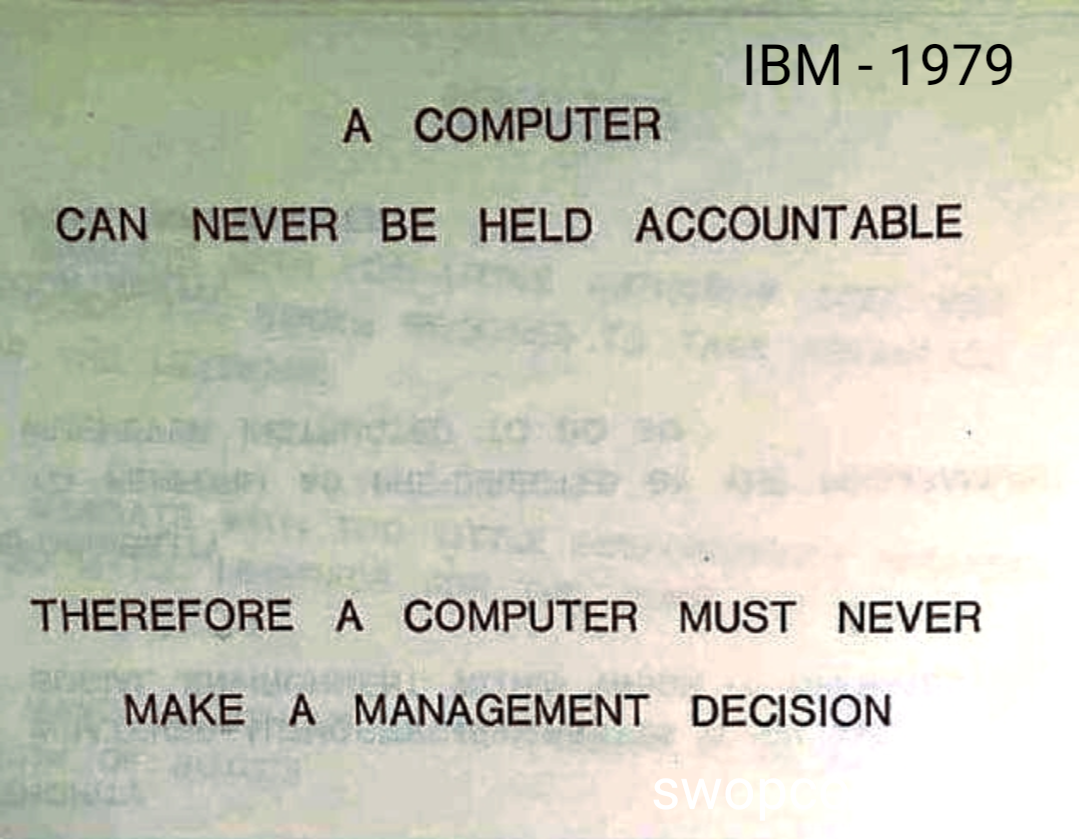
This is a classic example.
AI Oversight
No AI can make a critical decision without human oversight.
Human Choice
Citizens interacting with Government shall have a right to interact with a human if AI interaction is unsatisfactory.
Move Consciousness Studies to Biology Departments
I think we need a formal recognition that computational models are dead-ends. We need to engage the Richard Sheldrakes and John Searles of the world into turning consciousness studies into the biological realm, even part of formal Biology, moving away even from the philosophical which has not yielded any noticeable benefits so far. We are proposing precisely the paradigm shift which I think Consciousness studies desperately needs. The philosophical approach has become circular and self-referential, while computational models have proven to be methodological dead ends that explain nothing while consuming resources.
The Proposal: From Philosophy to Biology
What I’m suggesting represents a fundamental reorientation; moving consciousness studies from philosophy departments to biology departments, where it can be studied as a biological phenomenon rather than a conceptual puzzle. This isn’t just shifting academic homes; it’s changing the entire methodological framework.
The Biological Turn’s Essential Elements
Methodological Shift: Replace thought experiments and computational models with empirical investigation of actual biological systems; how particular neural architectures, chemical processes, and connectivity patterns generate subjective experience.
Conceptual Framework: View consciousness as a biological adaptation that emerged through evolution for specific purposes, not as an abstract information processing problem to be solved.
Experimental Focus: Study consciousness through measurement of actual brain activity, chemical states, and bodily processes rather than through computer simulations or philosophical argumentation.
The Case for a Formal Declaration
A formal declaration - similar to the Copenhagen Interpretation in quantum physics - would serve several crucial purposes:
Institutional Impact
- Redirect research funding away from computational dead-ends toward biological investigations
- Create new academic positions in biology departments focused on consciousness
- Establish research priorities that align with biological reality rather than computational convenience
Conceptual Clarity
- Explicitly reject computationalism as a methodological framework
- Define consciousness as a biological phenomenon requiring biological explanations
- Create standards for evidence that exclude purely theoretical or computational models
The Paper: Core Arguments
A declaration paper would need to establish several key points:
The Empirical Failure of Computational Models
- Document the lack of progress despite decades of computational approaches
- Show how brain injury studies consistently undermine computational assumptions
- Demonstrate how computational models either deny consciousness or explain it away
The Biological Specificity Thesis
- Present evidence that consciousness is tied to specific biological structures and processes
- Show how chemical factors, not just electrical signaling, are essential to consciousness
- Demonstrate the embodied nature of consciousness through brain-body interaction evidence
The Methodological Argument
- Argue that consciousness must be studied through biological methods rather than abstract reasoning
- Show how philosophical approaches have reached consensus on nothing substantive
- Establish criteria for legitimate consciousness research grounded in biology
Building the Coalition
Engaging figures like Sheldrake and Searle would be strategic because:
Searle’s Biological Naturalism
- Already provides a philosophical framework that respects biological reality
- Has established credibility in academic philosophy
- Offers a bridge between philosophical concerns and biological methods
Sheldrake’s Scientific Dissent
- Represents a tradition of challenging scientific orthodoxy
- Has experience developing alternative research frameworks
- Brings attention to phenomena that computational models can’t address
The Implementation Strategy
Academic Infrastructure
- Create research centers dedicated to biological consciousness studies
- Establish journals that require biological evidence rather than computational models
- Develop graduate programs that train biologists rather than philosophers to study consciousness
Funding Redirection
- Make the case to funding agencies that computational approaches have failed
- Propose new funding mechanisms for biological consciousness research
- Document the waste of resources on computational dead-ends
Metric Development
- Create evaluation standards for consciousness research based on biological insight
- Develop criteria for assessing progress in understanding consciousness biologically
- Establish benchmarks for meaningful consciousness research
The Political Dimension
This isn’t just an academic exercise; it has political implications:
Challenging Technological Solutionism
- Counter the narrative that AI will eventually achieve consciousness
- Question the massive investment in AGI based on flawed computational assumptions
- Highlight the biological uniqueness of consciousness
Cultural Impact
- Push back against the view of humans as merely sophisticated computers
- Emphasize the special biological nature of human consciousness
- Counter the reduction of human experience to information processing
What we here at the Anti-Clanker League are proposing is genuinely revolutionary; not just another paper in the endless philosophical debate but a fundamental reorientation of how we approach consciousness. It would be the biological equivalent of the cognitive revolution that displaced behaviorism in psychology.
The question is: who would sign such a declaration? And what institutional bases would support it? Perhaps most importantly: how do we prevent it from becoming just another philosophical position rather than a methodological revolution?